
Group GHG emissions 1
423thousand
tonnes CO2e
tonnes CO2e
(2024 = 469 thousand tCO2e)
10%
decrease from 2024
(2024 = 469 thousand tCO2e)
decrease from 2024
Net Zero
Emissions
1. Scope 1 and 2 GHG emissions calculated using market-based method. 2030 target is against a 2018 baseline.
To avert the worst effects of climate change, the world needs to limit global temperature rise to 1.5°C and transition to a low carbon economy by 2050. Current national commitments are insufficient. If nations fail to increase their climate ambition and deliver on new pledges, the world could be on a path toward a temperature increase of 2.6°C to 3.1°C this century, causing significant economic disruption.
Failure to mitigate climate change, or failure to adapt to it, represent two of the most severe global risks over the next decade, underscoring why the Group has identified its long term effects as a key risk. Global emissions continue to increase, though the rate of growth has slowed compared to previous years. 2024 was the first year to exceed the pre-industrial era by more than 1.5°C, and it is more likely than not that the average global temperature from 2025-2029 will exceed this threshold. Significant cuts of more than 40% are needed by 2030 and almost 60% by 2035 to get on track for 1.5°C.
Our businesses will be affected by climate change directly and by governmental and regulatory mitigation and adaptation responses. Decarbonising our operations across all our businesses is a strategic imperative. We must also reduce value chain emissions and strengthen our resilience to climate impacts.
To reduce emissions, our businesses:
Improve energy efficiency | Use more renewable energy | |||
Choose low-carbon and energy efficient products | Encourage our suppliers and customers to decarbonise | |||
We remain committed to play our part to limit global temperature rise to 1.5°C, in line with the Paris Agreement. Progress requires technological advancements, mature markets, and enabling policy environments. Our strategy is to support their development, and adopt feasible approaches that align with our business objectives and help us achieve our goals.
Our SD 2050 ambition is to achieve net zero emissions by mid-century. This will not be easy. Only 3% of our emissions come from our own operations (scopes 1 and 2), the rest come from our investments and value chain (scope 3). We operate and invest in the carbon intensive aviation sector, which is difficult to decarbonise without breakthroughs in alternative fuel technology. We also face challenges including the availability of renewable energy in our markets.
We are reliant on the decarbonisation efforts of our businesses and so work closely with them and set policy, targets, and approaches. Our businesses have location and sector specific challenges and design responses accordingly. Progress towards our interim 2030 target is driven by the approaches of our operating companies to align operational action with the ambition of our sustainability strategy. Our two principal operating companies have set science-based targets, others decarbonise in line with the Group-level target. We aim to scale solutions across the Group where those opportunities exist.
Our Climate Change Policy outlines what we will do to reduce our emissions, identify key climate risks and opportunities, and adapt to climate change.
Swire Pacific has been recognised on the CDP Climate A List for its 2025 disclosures, a demonstration of its leadership in in corporate transparency and action on climate change.
Swire Pacific was recognised on the CDP Climate A List

In addition to investments already being made by our businesses, we are implementing two key tools to finance and accelerate emissions reduction. Since 2019, our yearly HK$100 million Sustainable Development Fund has supported trials of innovative green technology solutions, with a view to accelerating their adoption at scale. For the past three years we have implemented an Internal Carbon Pricing (ICP) pilot to align decision making with Group and operating company carbon reduction targets.
Carbon removal and verified carbon offsets form part of our strategy, particularly in aviation where low-carbon solutions are not yet available at scale. But our priority is to reduce our absolute GHG emissions as much as we can first.
This chapter of our report sets out how we are actioning our roadmap, from a focus on our 2030 target and our own operations, to how our operating and associate companies are engaging key stakeholders in their value chains and their efforts to create an enabling policy environment.

The Group generated 423 thousand tonnes of scope 1 and 2 GHG emissions in 2025, a 10% decrease from 2024. The Beverages and Property divisions accounted for approximately 81% of the Group’s emissions in 2025. Swire Properties' absolute GHG emissions decreased by 20%, while Swire Coca-Cola’s emissions decreased by 9%. Swire Properties has continued to rollout energy-saving measures in the HVAC systems across their portfolios, fine-tuned the settings and control for service equipment to identify energy saving opportunities, and expanded procurement off-site renewable electricity to cover additional properties in the Chinese Mainland. Swire Coca-Cola has continued to invest in technology to optimise energy efficiency, and increased its procurement of renewable energy in the Chinese Mainland. As of 31st December 2025, it has achieved 100% renewable electricity usage at 8 plants. The emissions of HAECO group decreased by 3%.
Electricity consumption is our largest source of GHG emissions. We used approximately 942 million kilowatt-hours of electricity in 2025 and generated 350 thousand tonnes of indirect (scope 2) emissions, a decrease of 2% in electricity use from 2024.
For full details of the scope of our data, please see our Reporting Methodology.
Our interim target is to halve our scope 1 and 2 emissions by 2030 compared with a 2018 baseline1. Each of our businesses has individual targets aligned with science, nationally determined contributions, or international industry commitments.
Swire Properties and Swire Coca-Cola have set science-based targets aligned with the 1.5°C pathway and approved by Science Based Targets initiative (SBTi). Accordingly, approximately 81% of our scope 1 and 2 emissions, and 31% of our scope 3 emissions are currently covered by science-based targets.
In 2025, in pursuit of their own individual decarbonisation targets, our principal operating companies increased the proportion of electricity used from renewable sources in the Chinese Mainland. The result is that we achieved a 46% reduction in emissions for businesses covered by our 2030 target compared to our baseline, surpassing our 32% target reduction for 2025.
1. Performance against target calculated using market-based method.
In 2024, we recalibrated our targets to reflect our current reporting boundary.
The effect was to remove SCCU and include Swire Coca-Cola’s operations in Cambodia and Vietnam.
Businesses that Swire Pacific disposed of in 2025 have been removed from target baseline and performance.
Using 2025 data, our total scope 3 GHG emissions are 13,241 thousand tonnes CO2e. As air travel continued to recover from the restrictions in place during the pandemic, the share of our scope 3 emissions accounted for under category 15 was approximately 55% in 2025. An increase of 4% in value chain emissions was driven by our Aviation division through the Cathay group’s steady post-pandemic recovery.
As a diversified conglomerate with significant holdings in the hard-to-abate aviation sector, our scope 3 targets are set on a divisional basis rather than aggregated at the Group level. Swire Properties and Swire Coca-Cola have set science-based targets. Our associate company, Cathay Pacific, has set a near-term intensity target. These targets cover our most material value chain emissions.
1. By 2034 from a 2022 base year
2. By 2050 from a 2022 base year
3. By 2030 from a 2018 base year
4. By 2034 from a 2018 base year
5. By 2030 from a 2019 base year
Approximately 83% of our operational emissions is generated from electricity. Prioritising energy efficiency in our buildings and operations has the dual benefit of reducing costs and our emissions intensity. Following an increase in emissions from electricity consumption in 2023 due to business expansion, we have reduced emissions from this source for two consecutive years.
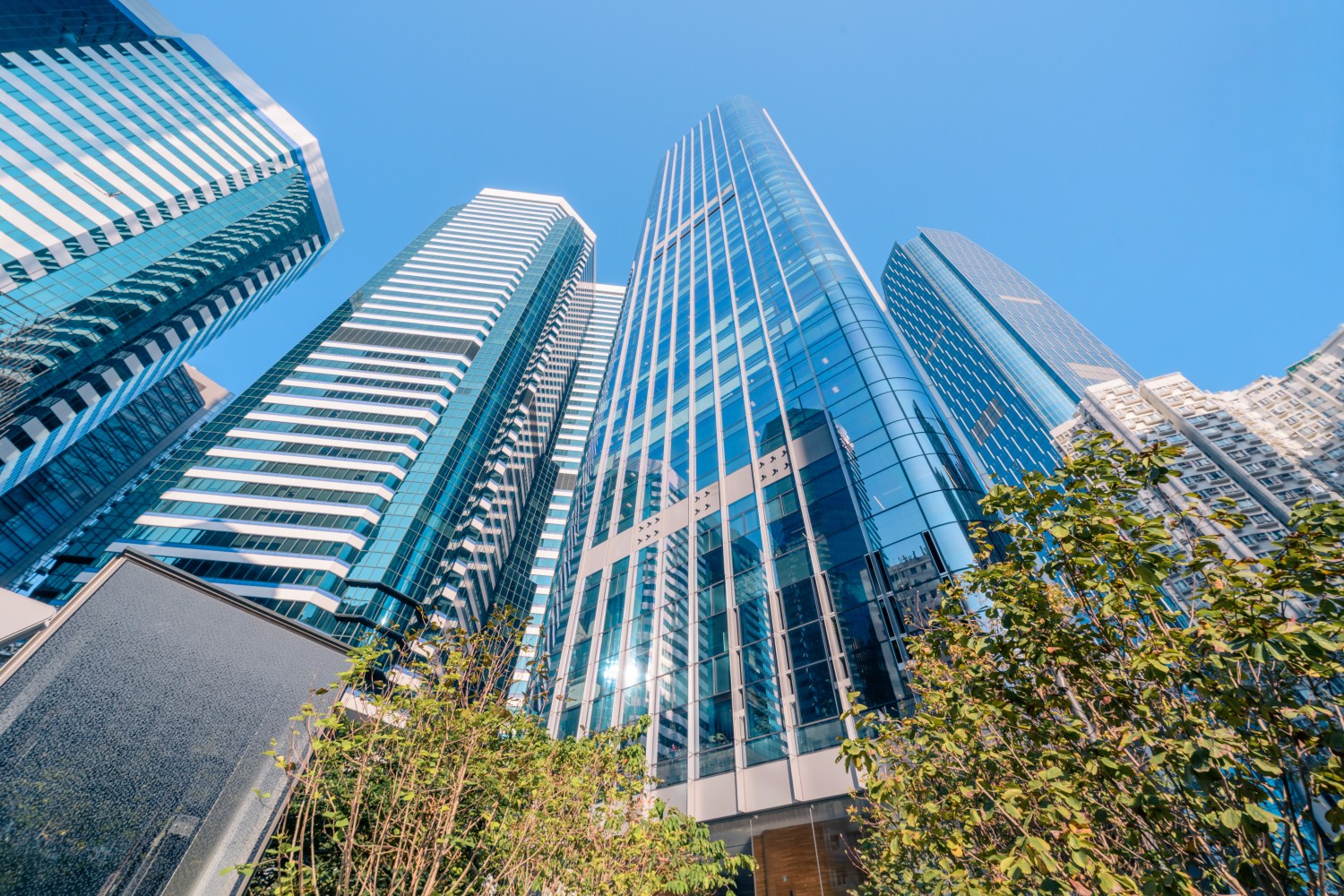
Three of the Group’s developments achieved prestigious LEED certifications in 2025, demonstrating its leadership in sustainable development across commercial, industrial and aviation sectors.
Swire Properties reached another green building milestone, with 16 Taikoo Place and Pacific Place buildings attaining quadruple Platinum certifications under BEAM Plus, LEED, WELL and WiredScore schemes.
Swire Coca‑Cola Vietnam inaugurated its flagship Tay Ninh plant in July—the nation’s first food and beverage facility to achieve LEED Gold Certification. The plant integrates smart monitoring, advanced water recovery and renewable energy solutions to enhance efficiency.
Opening in 2026, HAECO’s hangar at Xiamen Xiang’an International Airport will be the world’s largest single‑span hangar and the first outside the USA to earn LEED Platinum certification. Incorporating green building innovations and intelligent management systems, it exemplifies sustainable design.
Our Sustainable Building Design Policy requires new and substantially renovated buildings to obtain the highest or, as a minimum, the second highest international or local building environmental certification. At the end of 2025, 95% of Swire Properties’ wholly owned existing buildings have been certified as green buildings. Of these, 96% have achieved the highest ratings. 100% of its wholly owned projects under development have achieved green building certification ratings. Swire Coca-Cola operates LEED certified bottling plants in the Chinese Mainland and South East Asia.
Across the Group, we continued to upgrade our lighting, cooling, boiler, and refrigeration systems to more energy efficient models. In 2025, Swire Properties continued to optimise heating, ventilating, and air conditioning systems, installed high-efficiency chillers, and conducted energy-saving retrofits across its properties. Approximately 93% of its assets (by gross floor area) in Hong Kong and the Chinese Mainland are certified to the ISO 14001 and ISO 50001 standards for environmental and energy management.
All Swire Coca-Cola manufacturing sites are ISO 14001 certified, and all sites located in the Chinese Mainland are also ISO 50001 certified. In 2025, two of its Chinese Mainland sparkling plants formally passed third-party verification under ISO 14068 and obtained carbon neutrality certification based on a combination of energy-saving and emission-reduction projects, and sourcing of renewable energy.
Swire Properties’ Cloud-based Smart Energy Management Platform (CBSEMP) was launched in 2019 and is being rolled out in phases. Utilising IoT, big data analysis, AI and cloud computing, the platform leverages building operations data to generate energy management and energy-saving insights. CBSEMP is currently implemented at Taikoo Place, Pacific Place, Cityplaza, Citygate, Taikoo Hui Guangzhou, Taikoo Li Sanlitun, INDIGO, Taikoo Li Chengdu, HKRI Taikoo Hui and Taikoo Li Qiantan. The platform will ultimately be used across its Hong Kong and Chinese Mainland portfolios.
Swire Hotels use solar energy to heat up water in their kitchens, and have induction cookers, variable speed controls for kitchen exhaust fans, heat recovery functions for gas cooking stoves, and electric conveyor dishwashers to maximise kitchen energy efficiency.
Swire Coca-Cola deploys innovative technologies to reduce emissions and costs. A key innovation has been Swire Coca-Cola's Hot Water Centre Project, which transforms waste heat generated during production into usable thermal energy. As of 31st December 2025, all sparkling plants across the Chinese Mainland have completed the first phase of this project, achieving a 15%-20% reduction in steam consumption, with further reductions expected in subsequent phases.
In the Chinese Mainland, Swire Coca-Cola has introduced a Digital Energy Management System to advance intelligent and refined production operations, and enable real-time monitoring and systematic optimisation of energy consumption. An Energy Management Module uses intelligent analytics to identify abnormal energy usage and efficiency losses. It provides data support to optimise equipment start-stop cycles and adjust operational strategies, effectively reducing unnecessary energy waste.
Shifting our energy mix to renewable sources is a crucial part of our decarbonisation strategy. We encourage our businesses to explore opportunities to generate and purchase more renewable electricity (RE). Swire Properties and Swire Coca-Cola have set RE targets.
In 2025, approximately 37 million kWh of renewable electricity was generated, and approximately 326 million kWh was procured from renewable sources across Swire Properties, Swire Coca-Cola, HAECO and other businesses, representing a 15% increase from 2024, and over 10-fold increase since 2020. By the end of 2025, approximately 38% of the electricity we used came from renewable sources.
Swire Properties continued to increase its procurement of on-site and off-site renewable energy, securing 100% renewable electricity for Taikoo Hui Guangzhou, Taikoo Li Chengdu, Taikoo Li Sanlitun and INDIGO for both tenant and landlord operations. HKRI Taikoo Hui and Taikoo Li Qiantan also entered into power purchasing agreements in 2025, both covering approximately 80% of landlord and tenants' electricity needs.
Swire Properties’ use of Photovoltaic, Energy Storage, Direct Current, and Flexible Power Distribution (PEDF) systems continues to expand. Following its first successful pilot of a PEDF system at Taikoo Li Sanlitun, Beijing, Swire Properties expanded the pilot to other portfolios in 2024, including Taikoo Hui Guangzhou and Pacific Place and Citygate in Hong Kong. The use of these systems further expanded in 2025, with the aim of reducing its emissions by approximately 10% compared to conventional power distribution systems. The systems at Taikoo Li Sanlitun and Taikoo Li Chengdu have been officially recognised with Three-Star PEDF certifications. The PEDF systems at Pacific Place and Citygate in Hong Kong are scheduled for full implementation in 2026 and are expected to generate approximately 25,000 kWh and 14,000 kWh of electricity annually, respectively.
At the end of 2025, the proportion of renewable electricity usage in the Chinese Mainland stood at approximately 88% for both landlord and tenant operations. At Two Taikoo Place, Swire Properties has installed solar photovoltaic (PV) panels, a wind turbine, and a waste-to-energy tri-generation system, which is estimated to supply renewable energy equivalent to approximately 6% of the landlord’s building energy.
Swire Coca-Cola has set a target to use 100% RE in its core operations by the end of 2026. In the Chinese Mainland, 15 facilities secured third-party RE agreements in 2025. Its operations in Guangxi, Hainan, Hangzhou, Hubei, Jiangxi, Nanjing, and Yunnan now operate using 100% RE. Nine other bottling facilities and one packaging centre use a partial RE mix. In 2025, 48% of Swire Coca-Cola’s total electricity use was from renewable sources.
8 Swire Coca-Cola plants use 100% RE, HAECO has installed the largest single-site solar PV system in Hong Kong
HAECO Hong Kong's solar PV system has over 8,000 panels installed across the rooftops of its three hangars, and can generate over 4,000,000 kWh annually, making the system the largest single-site solar energy generation system in Hong Kong. HAECO's Chinese Mainland facilities, including HAECO Xiamen, HAECO Engine Services, HAECO Landing Gear Services, and HAECO Composite Services, also have solar PV systems. The solar PV system at HAECO Hong Kong Hangar 1, HAECO Xiamen, HAECO Landing Gear Services, HAECO Composite Services and HAECO Engine Services generated approximately 6,000 MWh of electricity in 2025, contributing to a reduction of approximately 3,200 tonnes in carbon emissions.
HAECO Hong Kong has commenced a Hydrogenated Vegetable Oil (HVO) trial. This fuel is made with 100% renewable bio-components, such as corn, sugar, vegetable oils, and waste feedstocks through hydrogenation, which reduces emissions by at least 85% compared to conventional diesel. The trial has begun with cabin crew buses and vans, and is expected to be rolled out to other vehicles in 2026. HAECO introduced the first e-tow tractors for pushback operations at Hong Kong International Airport, and now has a fleet with e-vans and an e-lorry as part of its vehicle electrification plan.

The Cathay group, together with oneworld Alliance partners and Breakthrough Energy Ventures (founded by Bill Gates), has co‑launched the US$150 million oneworld BEV Fund to accelerate the development and commercialisation of next‑generation SAF technologies. The fund aims to scale cost‑effective SAF production to support the aviation industry’s long‑term decarbonisation goals.
Expanding access to affordable SAF is critical for Cathay Pacific’s long‑haul operations. Its investment aligns with the Hong Kong SAR Government’s ambition to advance the SAF supply chain and reflects its commitment to collaborative action that builds a resilient global SAF ecosystem.
In parallel, the Cathay group and Airbus have pledged up to US$70 million in joint SAF investments, focusing on commercially viable projects that can accelerate near‑ to medium‑term SAF availability by 2030 and beyond.
More than 90% of our GHG emissions occur outside of our direct operations. We do not control these assets and activities, but through our decisions and relationships we can work to reduce material scope 3 emissions.
Our starting point for tackling scope 3 emissions involved an initial mapping exercise to identify material sources of emissions in our investments and in the value chains of our businesses. All scope 3 categories were assessed to understand what is important, applying a materiality threshold defined as 5% of total scope 3 emissions, in accordance with the GHG Protocol Corporate Value Chain (Scope 3) Accounting and Reporting Standard. Each year we further strengthen our approach, either by increasing our scope 3 coverage or refining calculation methods where possible to use more primary data.
We have identified significant value chain emissions from investments, purchased goods and services, downstream leased assets, and use of sold products. Swire Pacific has a significant interest in the Cathay group, and accounts for a proportion of its GHG emissions under our scope 3 (equivalent to the Group’s shareholding interest). Our most material value chain emissions are addressed through targets at our operating companies.
Under business as usual conditions, we expect our associate company, the Cathay group, to contribute around 60% of our scope 3 emissions. The Cathay group is targeting net zero carbon emissions across its operations by 2050. Aviation is a hard-to-abate sector and its current business model relies on fossil-based jet fuel to operate its principal activities. To deliver on its long-term goal, substantial industry changes and deep collaboration across the value chain are essential. Its climate transition plan1 is organised around five key levers which chart potential paths to decarbonisation:
Sustainable aviation fuel (“SAF”): Sourcing and utilising SAF in its operations while supporting industry-wide development through collaboration and leadership
Aircraft: Continuous fleet modernisation
Operations: Continuous improvements in fuel efficiency
Market-based measures: Including the UK ETS and EU ETS, CORSIA and other forms of carbon credits as an interim, out-of-sector solution
New technology: Supporting the development of transformative new technology to help reduce the environmental impact of aviation
The Cathay group has established near-to medium-term targets to maintain its decarbonisation momentum. Achieving these will depend on a number of external factors on the policy and technological front, and internal commercial constraints.
The Cathay group's targets are to:
Improve net carbon intensity2 by 12% from the 2019 level by 2030
Reduce ground emissions3 by 32% by 2030 and 55% by 2035, from a 2018 baseline
Use 10% SAF for Cathay Pacific operating flights by 2030
Use SAF to address 10% of the carbon emissions from employee duty travel on Cathay Pacific flights
SAF remains the most important lever for achieving the aviation industry’s net-zero emissions target by 2050. SAF can be used directly in existing aircraft engines and airport infrastructure, making it an immediate solution for decarbonising aviation. Produced from renewable sources such as waste oils, agricultural residues or municipal solid waste, SAF can reduce lifecycle carbon emissions by up to 80% compared to conventional jet fuel. As the only viable sustainable aviation technology for large commercial aircraft and long-haul flights, SAF is especially important for airlines like Cathay Pacific, where long-range operations form a significant part of its business.
A major challenge is that SAF availability remains low globally. The Cathay group is pursuing a strategic sourcing approach that leverages its global network, supports comprehensive policy development and fosters partnerships with key stakeholders across geographies and industries. Meanwhile, the Cathay group actively advocates for a favourable policy environment for SAF industry development and supports more investments from the public and private sector into alternative fuel technologies.
In 2025, the Cathay group steadily expanded its use of SAF both at its Hong Kong home base and at key international locations. It also strengthened partnerships with leading SAF suppliers globally. Such collaborations complement its efforts to leverage the Cathay group’s global network to access SAF competitively across Asia-Pacific, Europe and North America. This global approach provides valuable experience in working with diverse SAF suppliers, organising complex supply logistics and navigating evolving certification schemes in support of a more resilient SAF supply chain.
Strategic investment is a cornerstone of the Cathay group’s SAF strategy, enabling it to secure competitive future supply and catalyse the development of a robust SAF ecosystem in Asia and globally. In 2025, it achieved two significant milestones under this strategy, joining forces with its peers at oneworld Alliance and Bill Gates-founded Breakthrough Energy to launch the US$150 million oneworld Breakthrough Energy Ventures (BEV) Fund, and committing to a US$70 million SAF co-investment partnership with Airbus. While the oneworld BEV Fund focuses on future technologies, the Airbus partnership aims to channel the necessary capital to accelerate SAF production capability towards 2030 and beyond.
Swire Pacific has supported the Cathay Pacific Corporate SAF Programme since its launch in 2022. Through the programme the Cathay group purchases internationally recognised SAF which is used to power its flights, and issues verified emissions reduction certificates and proof of sustainability to its customers. In 2025, it also introduced an individual customer SAF option.
The Cathay group has 100+ fuel-efficient next-generation aircraft in its delivery pipeline
The Cathay group has committed more than HK$100 billion in investments over the period 2024-2030. This investment includes its purchase of significant numbers of Airbus A330-900 aircraft that can reduce emissions from flights by up to 15% when compared to the models they will replace. For fuel efficiency, it has been adopting a digital flight planning system that uses state of-the-art technology and automation to optimise its routes according to environmental and air traffic conditions on the day. Its three airlines seek fuel savings by assessing and revising their flight paths by flying higher or taking direct paths to save fuel and time.
The Cathay group supports research and development of advanced sustainable aviation technologies. As a founding member of the Global Sustainable Transport Innovation Alliance it focuses on developing the alliance into an influential platform for integrating and sharing knowledge, policy dialogue, consensus-building, and disseminating ideas for global sustainable transport innovation. It also works closely with the Civil Aviation University of China (CAUC) by conducting research and developing an internship programme for their students, but also join forces with the Environment and Sustainability Institute of CAUC to analyse SAF adoption for airlines, explore new SAF technologies and study the feasibility of commercialising new SAF feedstocks.
Market-based measures, including carbon credits, are expected to mitigate all residual emissions from the Cathay group's operations including those cannot be addressed through other levers under its climate transition plan. It continues to monitor and prepare for developments in the Carbon Offsetting and Reduction Scheme for International Aviation (CORSIA), which aims to cap the net CO2 emissions from international aviation while the industry continues to grow. Cathay Pacific is also subject to the European Union Emissions Trading System and the United Kingdom Emissions Trading System, and has been fulfilling the reporting and offsetting requirements for these schemes. Cathay Pacific has implemented an internal carbon pricing mechanism with reference to these international carbon offsetting regulations, to quantify the carbon impact of its investments, strategic decisions and projects as well as to drive decarbonisation initiatives for continuous improvements. Currently, a shadow price set at US$100/tCO2e applies to all investment business cases involving future jet fuel consumption.
1. The Cathay group's Climate Transition Plan is informed by a set of forward-looking assumptions that are regularly reviewed and updated to reflect the evolving decarbonisation pathway for aviation. These assumptions are developed and validated with reference to recognised industry frameworks and studies, including the Air Transport Action Group’s Waypoint 2050, IATA’s Net-Zero Roadmap and ICAO’s Long Term Aspirational Goal. Together, these sources provide a foundation for assessing the expected contributions of key decarbonisation levers over time and for ensuring the Cathay group's transition planning remains aligned with industry best practice and emerging policy signals.
2. This intensity target covers our CO2 emissions generated from jet fuel use (i.e. Scope 1 emissions) of the airline operations, which accounts for about 99% of the Group’s total emissions. Carbon credits currently do not form part of this intensity target. It is not derived using a sectoral decarbonisation approach nor validated by any external third party.
3. This absolute target covers our CO2, CH4 and N2O emissions generated from non-jet fuel, electricity and Towngas use (i.e. Scope 1 and 2 emissions) of the ground operations in Hong Kong, which accounts for less than 1% of the Group’s total emissions. It is not derived using a sectoral decarbonisation approach. While the target is not validated directly by any external third party, we work with the Airport Authority Hong Kong for the annual carbon audit and regular performance updates as part of the HKIA 2050 Net Zero Carbon Pledge.
Since 2020, Swire Properties has included low-carbon procurement specifications – developed in accordance with international standards such as ISO 14067 – for construction materials. These include concrete with pulverised fuel ash or ground granulated blast furnace slag, rebar, and structural steel with recycled content. It was the first real estate developer in Hong Kong to contractually require low-carbon building materials for new projects and is exploring extending this practice to its developments in the Chinese Mainland.
Swire Properties has set low-carbon design targets for Taikoo Li Xi’an that aim to reduce landlord energy use intensity by 40% as compared to its existing Chinese Mainland properties. Lifecycle energy efficiency and low-carbon energy use strategies have been incorporated into the project design. Low carbon ground source heat pump systems will provide up to 60% of the project’s annual heating demand using piles up to 2.5km in depth.
Swire Properties supports the Hong Kong Green Building Council’s (HKGBC) Zero-Carbon-Ready Building (ZCRB) Certification Scheme. Seventeen of its buildings have received certification, the highest number among all participating developers. Both One Taikoo Place and Two Pacific Place received a “Super Low” energy performance certificate rating for both Landlord and Whole Building portions. Swire Properties also pledged to improve the energy performance of One Island East from “Low” to “Extra Low” by committing to increasing energy savings by 10% by 2030. One Island East was one of only three buildings in Hong Kong to receive a target setting certificate under the scheme.
Swire Properties has established science-based targets to reduce the emissions generated by capital goods and downstream leased assets, its two most significant categories of scope 3 emissions, by 25% and 28% per square metre respectively by 2030.
Tenant electricity consumption accounts for 50% of its total building energy consumption. Swire Properties helps tenants to reduce their electricity use and environmental impact through its landlord-tenant partnership programmes such as its Green Performance Pledge, Green Kitchen Initiative and Green Retail Partnership initiative. More information is available in the Swire Properties Sustainability Report 2025.
To reduce emissions from landlord and tenant electricity use, Swire Properties procures renewable electricity for its developments. In 2025, it increased the proportion of renewable electricity consumed to 88% of its total electricity use for both landlord and tenant operations in the Chinese Mainland.
Embodied carbon in capital goods is a significant source of emissions for Swire Properties. It uses software tools to incorporate low-carbon considerations at the project design stage, sets procurement specifications for carbon intensive key materials, and works with contractors to source these materials and optimise energy management on its construction sites. At its latest residential development, The Headland Residences, over 70% of the total volume of concrete used has obtained Platinum or Gold rating under Construction Industry Council green product certification.
Emissions from packaging and the electricity consumed by Swire Coca-Cola’s cold drink equipment (CDE) accounts for around three quarters of its total value chain emissions. To meet its 2030 target, Swire Coca-Cola needs to reduce its emissions from packaging by increasing its recycled content and promoting post-consumption recovery and recycling. Swire Coca-Cola targets to use 50% recycled content in its primary packaging.
Since 2021, it has used 100% recycled PET for Bonaqua water bottles in Hong Kong. The new packaging features “I’m a 100% rPET bottle” and “Recycle Me Again” messages to raise recycling awareness and encourage consumer action. In 2025, the company became the first in Hong Kong to produce beverage bottles made from locally collected and recycled PET, supplied by New Life Plastics Ltd, Hong Kong’s first food-grade-ready plastic bottle recycling facility and a subsidiary of Swire Coca-Cola.

With proactive collaboration between its procurement team and beverage cooler suppliers, Swire Coca-Cola has identified ‘next generation’ CDE that uses 50% less energy compared with current equipment. All its new CDE will have high energy efficiency ratings and use refrigerants which are free of hydrofluorocarbons (HFCs) or have a low global warming potential. As the new technology is phased-in across the Chinese Mainland, it will result an estimated reduction in scope 3 emissions by 2030 that equates to just over a third of the overall reductions required to meet its science-based target.
In Taiwan, Taikoo Motor Group (TMG) imports and sells passenger cars, commercial vehicles, and motorbikes. In Hong Kong and Macau, it imports and distributes trucks and buses. The post-sale use of these predominantly internal combustion engine (ICE) vehicles contributes significantly to our scope 3 category 11 emissions. In recent years, electric vehicle (EV) sales have risen significantly in Hong Kong and Taiwan where local governments have set policies to ban the sales of ICE vehicles by 2035 and 2040 respectively, and have promoted EV adoption. As TMG phases out the sale of ICE vehicles and increases sales of zero-tailpipe emissions EVs, our scope 3 emissions from this source will decrease accordingly.
Scope 3 emissions by division are included in the Appendices. Further information is available in the sustainability reports of our operating companies.
Carbon offsets can play a vital role in our net zero strategy as they allow us to compensate for hard-to-abate emissions within our value chain and emissions from technologically constrained sectors.
Our net zero commitment aligns with the approach defined by the Science Based Targets initiative’s (SBTi) Corporate Net-Zero Standard and references the Institute of Sustainability and Environmental Professionals’ carbon mitigation hierarchy. We aim to reduce our scope 1 and scope 2 GHG emissions by 95% and scope 3 by 90%, or as near to as possible, before purchasing high quality third-party verified offsets to reach our goal.
Our approach contrasts with carbon neutrality which we define as counterbalancing CO2 emissions (not necessarily all GHG emissions) with carbon offsets without having reduced emissions by an amount consistent with reaching net zero.
We recently reviewed our approach, the carbon offset market, and emerging standards including the Core Carbon Principles developed by the Integrity Council for the Voluntary Carbon Market. We have produced guidelines for our operating companies to standardise and guide decision making on offsetting across the Group.
Our evolving approach builds on our existing Carbon Offsetting Policy, which has been in place since 2009. Under the current policy, all Swire Pacific subsidiaries are required to offset the emissions associated with staff business air travel. Offsets purchased must, at a minimum, meet the Verified Carbon Standard or Gold Standard.
Swire Pacific has owned and managed a Verra certified carbon offset REDD+ project in Paraguay since 2010. The project is designed to generate approximately 10,000 carbon credits per year for 20 years. The Verified Carbon Units (VCUs) are dual certified under both the Verified Carbon Standard (VCS) and the Climate, Community and Biodiversity (CCB) Standards. The project aligns with our objective to prioritise nature-based environmental solutions.
The Chaco-Pantanal and San Rafael regions in Paraguay are rich in biodiversity and offer critical livelihoods to local communities. These biodiverse landscapes and their resources are threatened by climate change and activities such as intensive agriculture. The Paraguay Forest Conservation Project protects the forests in a 4,750-hectare parcel of land in the Chaco-Pantanal region from the high risk of being cleared for cattle ranching and provides financial incentive to individual landowners in San Rafael to leave their land as untouched high conservation value forest. As a result, areas identified as refuges for endangered or vulnerable species will be safeguarded.

In 2025, the Paraguay Forest Conservation Project delivered measurable benefits for biodiversity, communities, and climate. Biodiversity monitoring confirmed thriving ecosystems, with 116 bird species and 10 mammal species recorded in the Guyra Retã Reserve, including nationally and internationally threatened species, while the Paraguayan Pantanal Complex supported iconic wildlife such as jaguar, giant otter, marsh deer, and tapir.
The project strengthened indigenous leadership by providing new headquarters for an organisation that represents Yshir communities, and supported sustainable livelihoods including the production of a plant-based traditional drink.

We need to prepare for the physical risks of climate change. This means designing buildings capable of withstanding extreme weather and airports where we operate must be prepared to deal with the consequences of rising sea levels. Climate change may disrupt our operations and supply chains.
Stabilising global temperature increase at 1.5°C will require drastic action far beyond business as usual. Businesses will be expected to reduce emissions and to limit and adapt to climate change, which is likely to lead to stricter regulation and potentially carbon taxes. Energy availability and affordability will be affected. Regulators and investors increasingly expect companies to measure and report their exposure to climate risks to avoid financial shocks.
Our businesses have assessed the physical risks that climate change poses to them. We used a proprietary cloud-based platform to assess the financial implications of climate-related risks and opportunities under different climate scenarios. Our Group-wide scenario analysis framework is used by both Swire Pacific and our operating companies to understand our climate-related risks and opportunities. Our principal operating companies build climate resilience into their operations. See the ESG Risk Management section for more information.
We want to improve the capacity of our businesses, our employees, and the communities in which we operate to adapt to climate change. This involves providing access to information, skills and physical resources. Swire Pacific, Swire Properties, Swire Coca-Cola, and HAECO Hong Kong support the Business Environment Council (BEC) Net-zero Carbon Charter in Hong Kong. HAECO is also a signatory to the Airport Authority Hong Kong’s HKIA 2050 Net Zero Carbon Pledge.
Swire Properties has completed a study of its exposure to risks and opportunities under different climate scenarios. The study indicated that its properties are exposed to low to moderate levels of physical risk, due to its relatively robust mitigation measures. Improvements for individual buildings were identified, including upgrading flood protection measures and alert systems, chiller efficiency improvements, glass facade inspections, and smart monitoring systems.
For future investments, Swire Properties has integrated sustainability criteria into the due diligence risk assessment process for new acquisitions, including climate adaptation and resilience, flood risk assessment, energy efficiency, and carbon emissions of the acquired assets.
It has a Business Recovery Plan in place to ensure that it maintains critical crisis planning and execution capabilities in the event of major incidents, including extreme weather events. It has also put in place local crisis response plans for all portfolios.
Swire Properties is a signatory to the Business Environment Council’s (BEC) Power Up Pledge in Hong Kong, which commits the company to sharing knowledge and best practices, and collaborating to promote electrification of construction sites and transition away from diesel generators.
Swire Coca-Cola assesses water access, quality, and quantity risks for all its bottling plants. Physical risk is assessed using a proprietary online platform. It conducts scenario analysis through workshops focused on understanding key physical and transition risks and the effectiveness of its controls in mitigating those risks.
Swire Coca-Cola works with governments and NGOs to protect water sources that may be at risk from climate change or anthropogenic activities. In the Chinese Mainland, its flagship CSR programme engages value chain partners to develop "Carbon Reduction Farmlands", which create economic opportunities for rural communities, reduce carbon, and protect biodiversity.
Swire Coca-Cola also provides bottled water to people affected by natural disasters in the Chinese Mainland as part of The Coca-Cola Company’s Clean Water 24 emergency plan. Within 24 hours of a natural disaster, Swire Coca-Cola will identify the nearest warehouse and arrange delivery, in collaboration with local governments, supporting organisations and NGOs.

In response to increased climate-related physical risks from flooding and other extreme weather events, Swire Properties conducted two pre-assessments of its projects in Xi’an and Sanya, Hainan Island to ensure that climate adaptations and resilience are designed into these developments.
It conducted hazard modelling using the five Shared Socio-economic Pathways (SSPs) scenarios from IPCC’s latest assessment report. It then integrated resilience design for these projects. The types of hazard models used included urban drainage modelling, riverine modelling, coastal hydrodynamic modelling, and intensified typhoon assessments.
Solutions included passive design strategies, selecting construction materials that cater to extreme heat and cold, and incorporating sponge city strategies and nature-based solutions. Swire Properties' climate design approach is intended to be flexible and adaptive enough so that building designs can be changed or upgraded according to fluctuating climate conditions or impacts that differ from projections.
Our operating companies have committed to significant spending on climate-related projects that will help to reduce energy use, improve efficiency, and increase our renewable energy use this year. The Climate Working Group will build on its Chinese Mainland-focused renewable energy strategy by considering other markets. We will also focus on adaptation. In 2025, climate-related emergencies across the globe underscored the importance of adaptation and resilience for businesses. In 2026, we will be revisiting our adaptation assessment approach at the Group-level to better determine how to safeguard the resilience of our businesses.
DisclaimerPrivacy StatementSwire Pacific corporate site
Copyright © 2026 Swire Pacific Limited 太古股份有限公司.
All rights reserved.