
Waste generated
67.2thousand
tonnes
tonnes
(2024 = 74.3 thousand tonnes)
10%
decrease from 2024
(2024 = 74.3 thousand tonnes)
decrease from 2024
Zero Waste
to Landfill
Global waste generation is expected to increase by around two-thirds by mid-century without urgent action1, while only a small fraction is currently recycled or recovered. Landfills are reaching capacity and waste management costs are rising worldwide. In our core markets, we face growing and tightening regulations, infrastructure constraints, and public expectations for corporate action.
Efficient resource and waste management have therefore become both an environmental and business priority. Waste represents not only a potential liability, but also an opportunity to recover value, enhance efficiency, and reduce emissions. There is a need to decouple growth from the consumption of finite resources and keep resources in the loop for longer. Doing so will help address challenges like climate change, biodiversity loss, and pollution, and support a more resilient economy.
To reduce waste, our businesses:
Avoid and Reduce | Reuse, Recycle and Recover | ||||
Collaborate and support a circular economy | |||||
1. World Bank (2018) What a Waste 2.0: A Global Snapshot of Solid Waste Management to 2050. Washington, DC: World Bank.
By reducing and recycling our waste, we lower the cost of packaging, waste management and disposal, while creating opportunities to recover value from materials and potentially create new revenue streams. Our ambition is to turn today’s waste into a resource for tomorrow and to contribute to the creation of a circular economy. Our SD 2050 ambition is to achieve zero waste to landfill by 2050. Our strategy focuses on reducing waste at source, improving packaging design and recyclability, and promoting reuse, recycling, and recovery across our operations.
Our Waste Management Policy sets out the Group’s approach to managing and reducing waste across its operations. Our Waste Management Data Protocol specifies our waste management hierarchy by which we evaluate and address our waste management approach.
We manage hazardous and potentially hazardous waste in an appropriate, responsible and transparent manner. Our operations are not associated with the significant use of hazardous substances, nor do they generate significant emissions of volatile organic compounds (VOCs), nitrogen oxides (NOₓ) or sulphur oxides (SOₓ). We comply with applicable environmental and chemical safety regulations across our operating regions, with no substances classified as hazardous under local laws.
In 2025, the Group generated a total of 67 thousand tonnes of waste, 10% less than in 2024. Of this, 96% was non-hazardous waste and 4% was hazardous waste. Companies included under our 2030 target generated 63 thousand tonnes of non-hazardous waste. Overall, 64% of the total non-hazardous waste generated by the Group in 2025 was recycled, reused, or recovered. Our Property and Beverages divisions accounted for 53% and 40% of the Group’s total non-hazardous waste in 2025 respectively.
Swire Properties' waste diversion rate was 41% in 2025, which has increased from 2024. Tenants in Hong Kong and the Chinese Mainland are encouraged to reduce and recycle waste. Swire Coca-Cola’s waste diversion rate was 93% in 2025, which has increased from 2024. HAECO’s waste diversion rate slightly increased from 67% in 2024 to 69% in 2025.
By 2030, we aim for 65% of our waste to be diverted from landfill. The target covers non-hazardous waste generated by operating companies, which made up 98% of the Group’s total non-hazardous waste footprint in 2025. Operating companies covered by our target diverted 64% of their waste from landfill in 2025. Based on our 2030 projections, we surpassed our 61% waste diversion target for 20251.
1. Hazardous waste is not included in the target. It is treated in line with local regulations. Excludes Swire Coca-Cola operations in Thailand and Laos, which are not yet within our reporting boundary.
The easiest way to reduce waste is not to use single-use materials and packaging, where possible. We collect data about our waste. We try to take account of waste prevention when we design and buy things. We encourage employees and customers to minimise waste.
Our Waste Working Group covers waste-related matters and has developed an internal handbook on single-use plastics. It provides subsidiaries with information about different types of plastics and alternative materials, and guidance to inform procurement decisions. These include the need to consider whether the material can be recycled or composted, whether local recycling infrastructure exists, and whether there is market demand for the recycled material, which would facilitate its collection and recycling. The handbook was also shared with members of our Sustainable Supply Chain Working Group.
Swire Properties’ Resource and Circularity Policy deals with the design, planning, construction, and operation of its buildings. It evaluates the management of resources, analyses information about waste, and tries to promote the circular economy. Tenants and other building users generate over 90% of the waste generated in Swire Properties’ buildings. Engaging with tenants is critical to reducing waste. Swire Properties collects and tracks data on more than 20 types of waste produced by tenants, hotel guests, and serviced apartment occupants.
In July 2022 in Hong Kong, the Green Performance Pledge (GPP) was officially launched. It is a performance-based landlord-tenant partnership, focusing on creating a significant impact in terms of energy, water, and waste reduction. This performance-based programme gives users access to an array of “green tools” and enhances tenant-landlord collaboration. Tailored SD offerings include Hong Kong’s first smart waste reduction monitoring system. Swire Properties exceeded its 2025 goal of engaging 50% of office tenants in Hong Kong and the Chinese Mainland in the GPP. Over 180 tenants in Hong Kong and the Chinese Mainland had signed the GPP by the end of 2025.
Swire Coca-Cola works to reduce the amount of material it uses per bottle or can, which is referred to as "lightweighting". It also promotes returnable options, for example, Swire Coca-Cola Hong Kong introduced an optimised version of the returnable glass bottle (RGB) to the market in 2022. The new bottle comprises 60% recycled glass material, and while it is one-third lighter than before, the serving size has increased by 30% to 250ml.
Swire Coca-Cola reduces its packaging impact through lightweighting, promoting returnable options, and increased recycled content
Swire Coca-Cola aims to use 50% recycled content in its primary packaging, reducing dependence on virgin materials and supporting a circular economy. Since 2019, Swire Coca-Cola Hong Kong and The Coca-Cola Company have expanded the use of 100% recycled PET (rPET) for bonaqua® and Coca-Cola® products. All 500ml Coca-Cola® Original, Coca-Cola® No Sugar and Coca-Cola® Plus bottles are made from 100% rPET (excluding caps and labels). Swire Coca-Cola has been collaborating with other industry players to promote the acceptance of recycled aluminium in food-contact packaging in the Chinese Mainland. In 2024, an official statement was made by the National Health Commission announcing that recycled aluminium (rAL) can be used in packaging for beverages, provided it meets the relevant standards. Swire Coca-Cola used 33% rAL in the Chinese Mainland in 2025.
Our Zero Waste to Landfill target primarily falls under recycling and recovery within the waste hierarchy. We collect and sort different types of waste and work closely with recycling partners to provide credible outlets for the recyclables we collect.
We have implemented Group standards for waste separation at source. They require the provision of separate receptacles for five main categories of waste: paper, metals, plastic bottles, general plastics, and general waste. Glass and food receptacles should be placed at strategic locations, where appropriate. Guidance on the density and placement of receptacles is provided. The standards apply to both customer-facing and non-customer-facing operations.
Through our Waste Working Group, Waste Separation Guidelines have been implemented across all operating companies wherever possible, and many have extended separation to include food waste. Where local regulation around waste separation is already in place, which is the case in the Chinese Mainland, local regulation takes precedence. Having a consistent approach across the Group supports materials supply to Swire Coca-Cola’s recycling subsidiary New Life Plastics. We engage our waste contractors and landlords to send collected material to recycling facilities.
In 2025, the waste diversion rate from Swire Coca-Cola's core operations reached
93%
Swire Coca-Cola aims to achieve zero waste certifications for its manufacturing sites. This does not include waste generated from post-consumer packaging. In 2025, the waste diversion rate from core operations reached 93%. As of 31st December 2025, Swire Coca-Cola’s Hangzhou, Nanjing and Shenmei Jinqiao bottling facilities in the Chinese Mainland, along with its Taiwan plant, have obtained UL 2799 Zero Waste to Landfill validation with the highest platinum rating from UL Solutions – a leading global certification services provider. To attain the platinum rating, companies are required to achieve at least 90% waste diversion rate from landfills.
Swire Properties introduced Hong Kong's first smart reusable cup network at Taikoo Place in late 2020. The programme was then expanded to Pacific Place and Cityplaza, and also included reusable food boxes at Taikoo Place. By the end of 2025, the programme has helped saved over 58,000 disposables from landfills since its inception . Building on this success, Swire Properties also introduced the Green Corporate Catering Programme at Taikoo Place and supported events with reusable items in 2025.
As part of the redevelopment of The Opposite House into a retail landmark, over 95% of demolished materials were diverted from landfill through reuse and recycling. A portion of these materials were repurposed in retail spaces at Taikoo Li Sanlitun and Taikoo Place Beijing for construction and decorations. In the Chinese Mainland, Swire Properties also initiated an "open ceiling" solution for the first time as the handover of new office premises in Taikoo Place Beijing and Lujiazui Taikoo Yuan, with world-class standards and quality. This solution tackles the issues of abortive construction work and disposal of like-new materials.
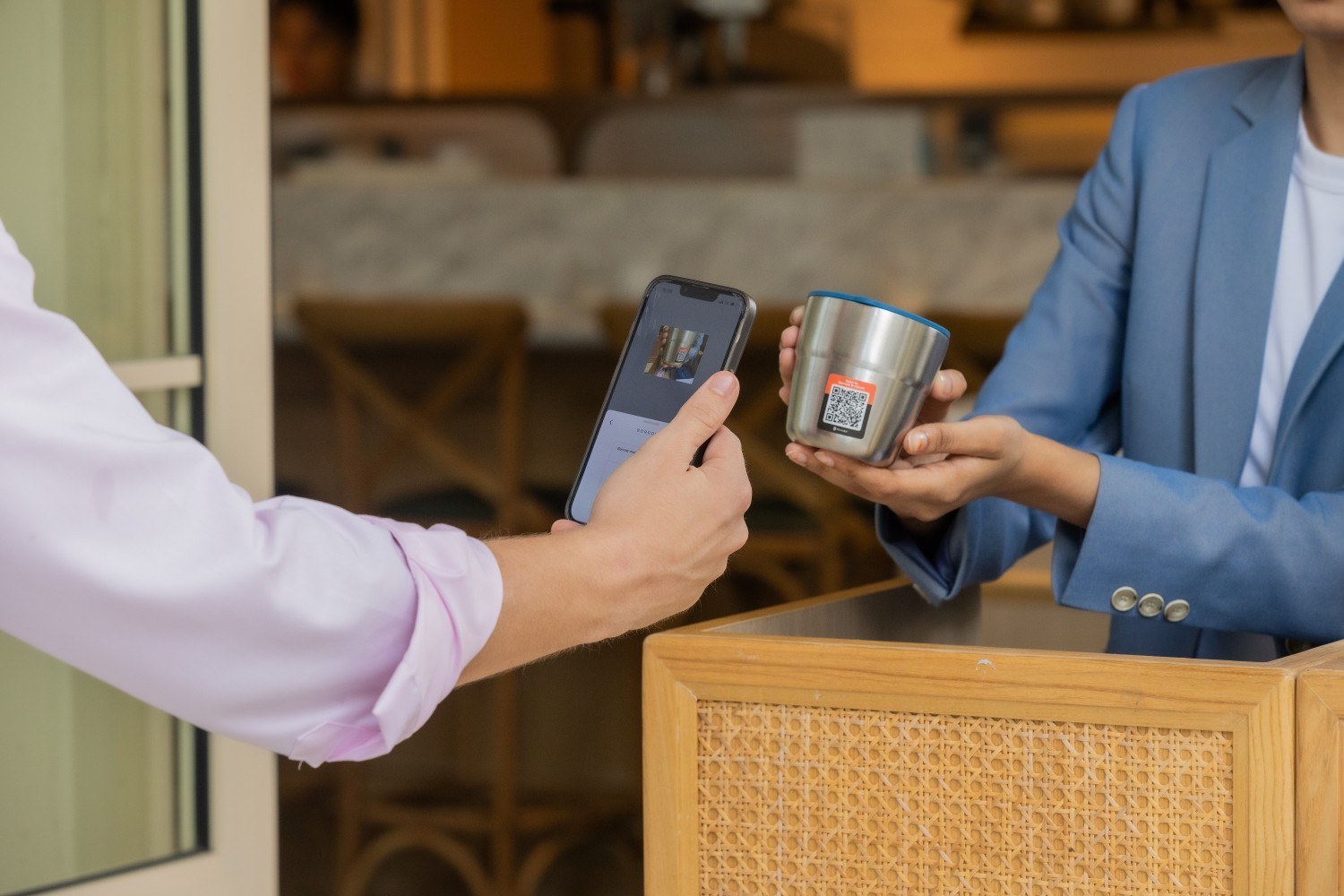
To minimise waste generation and cultivate a culture of reuse in its communities, Swire Properties piloted Hong Kong’s first smart reusable cup network at Taikoo Place in late 2020. The programme has since expanded.
In 2025, Swire Properties’ held the “Bring Your Own Cup” campaign at Taikoo Place and Pacific Place, offering free drinks for customers that bring their own cup or borrow a Muuse reusable cup. The initiative resulted in more than 4,500 redemptions at Taikoo Place and Pacific Place.
Swire Coca-Cola does not control what happens to its packaging after consumption, but it wants to transform the way waste is dealt with and to promote a circular economy. It is an Ellen MacArthur Foundation member and works closely with The Coca-Cola Company (TCCC) to achieve its packaging goals.
With TCCC, it is working to put recycling instructions on its beverages' labels. It formed a joint venture with Baguio Waste Management & Recycling Limited and ALBA Group Asia Limited to build and operate New Life Plastics (NLP), Hong Kong’s first food-grade ready plastics recycling facility. In late 2023, NLP became a Swire Coca-Cola subsidiary. In 2025, NLP recycled 200 million bottles, marking its highest annual output since operations began in 2022.
This is what Swire Coca-Cola does:
Reduces single-use packaging as much as possible by cutting its amount and weight, and by using returnable glass bottles
Redesigns packaging so that it is easy to recycle, has value when recycled, and includes recycled materials
Facilitates better recovery of packaging through clear labelling and disposal instructions
Recycles packaging materials into the highest value end-products possible
Collaborates with government, industry, waste management companies, and non-profit organisations to promote the transition to a circular mode
In 2025, Swire Properties, Swire Coca-Cola Hong Kong, and HAECO Hong Kong collected approximately 1,200 tonnes of food waste and organic by-products. They were sent to an food waste recycling facilities in Hong Kong for conversion into compost and biogas.
>1,200 tonnes
food waste collected from Swire Properties, Swire Coca-Cola and HAECO in Hong Kong
Swire Properties continued working with its hotels and tenants to promote food waste reduction and recycling. In 2025, more than 9,100 tonnes of food waste was collected from its Hong Kong and Chinese Mainland portfolios and hotels. To strengthen waste segregation, Swire Properties partnered with Green Council to implement a monthly inspection programme covering over 80 F&B outlets in Citygate Outlets, Cityplaza, Pacific Place, and Taikoo Place.
Swire Properties partners with a local green enterprise to recycle coffee grounds, turning grounds collected from F&B and office tenants into high-quality organic compost. Over 30 tonnes of coffee grounds have been collected via this partnership so far. In parallel, Swire Properties is exploring opportunities to “close the loop” by applying this compost to landscaping projects across its portfolio.
Swire Properties continues to support the food waste recycling initiatives run by the Environmental Protection Department (EPD) in Hong Kong. In 2025, seven residential estates enrolled in the EPD's Waste Reduction and Recycling Charter, helping collect at least six types of recyclables (paper, metal, plastic, glass containers, beverage cartons and food waste). Taikoo Shing also takes part in the Pilot Scheme on Food Waste Smart Recycling Bins and progressively deploys 20 smart recycling bins. These bins operate 24 hours, automatically measuring recyclables and awarding electronic bonus points to incentivise participation.
Going beyond waste management strategies and considering how to change business practices to become more circular are increasingly important.
Construction waste and operational waste account for a huge proportion of total waste disposal. Swire Properties has a Resource and Circularity Policy, putting greater emphasis on “designing out” waste and keeping products in use while continuing to enhance resource recovery and recycling across our operations.
99% of Swire Coca-Cola's primary packaging was technically recyclable in 2025
Swire Coca-Cola applies circular economy principles in the design of its packaging, and partners with others to improve its recovery and recycling. The company targets 100% of its primary packaging to be technically recyclable by 2025 and at least 50% recycled content in primary packaging by 2030. It also pursues "lightweighting" to reduce material use per bottle or can. In 2025, over 99% (by weight) of its primary packaging was technically recyclable, and the overall primary recycled content was 11%.
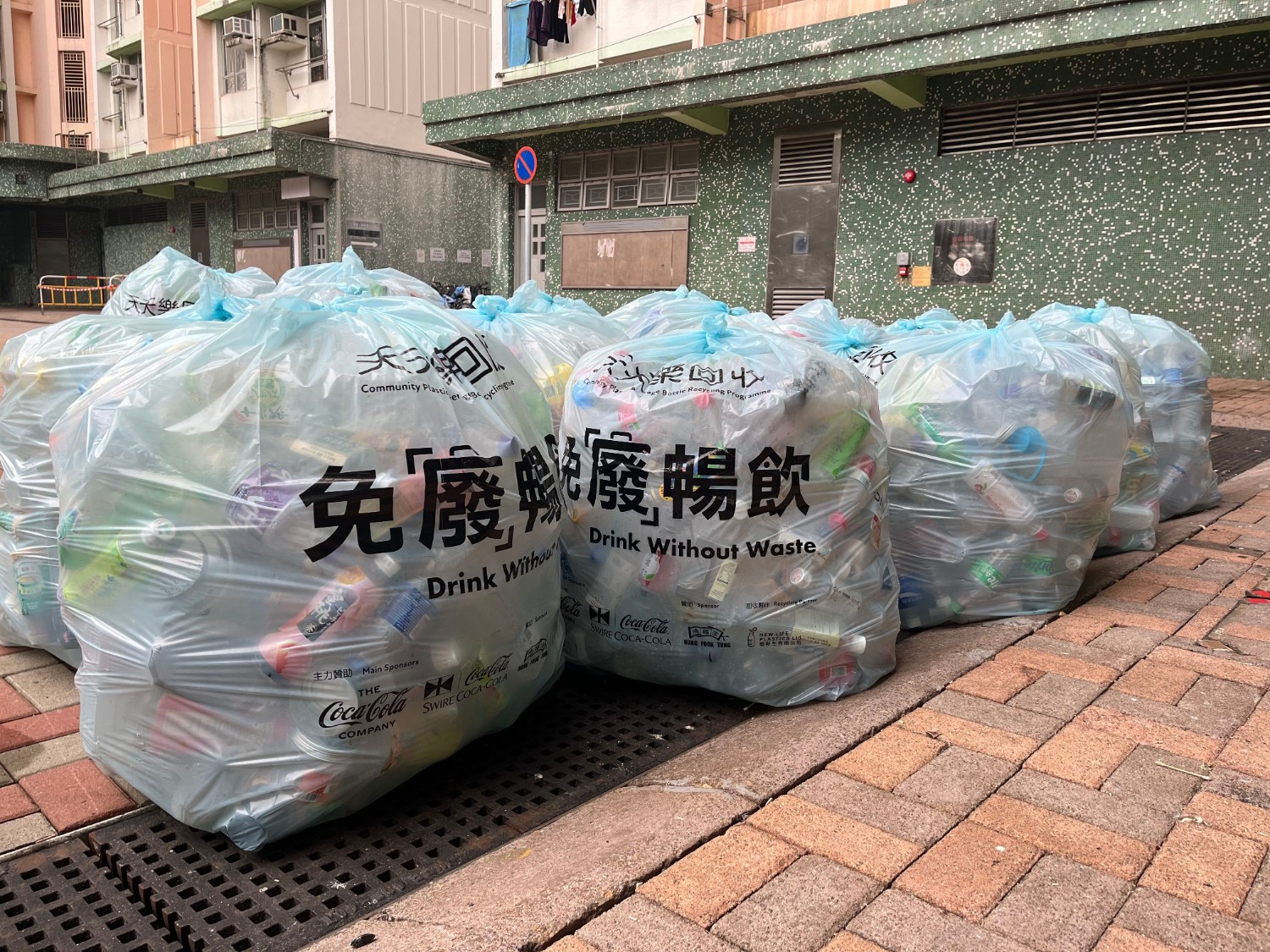
In 2025, Swire Coca-Cola Hong Kong continued to advance circular packaging through its “bottle-to-bottle” initiative with The Coca-Cola Company. The business became the first in Hong Kong to produce beverage bottles made from locally collected and recycled PET, supplied by New Life Plastics, Hong Kong’s first food-grade-ready plastic bottle recycling facility and a subsidiary of Swire Coca-Cola.
In 2025, New Life Plastics processed over 400 tonnes of PET bottles each month and recycled 200 million bottles over the year, providing recycled material for Coca-Cola® Trademark 500 ml and bonaqua® 550 ml - 1.5 L bottles. Swire Coca-Cola is also investing in collection schemes and community education to make recycling more accessible and to help the facility reach its full capacity.
In 2023, Swire Pacific joined Eat Without Waste, a coalition of NGOs, F&B producers and property developers in Hong Kong organised by the ADM Capital Foundation. The aim is to reduce the amount of take-out waste going to landfills by working alongside four key stakeholder groups: F&B operators, consumers, policymakers, and packaging manufacturer and distributors.
Swire Coca-Cola works with other parties in the waste value chain. In Hong Kong, Swire Coca-Cola helped to establish Drink Without Waste (DWW), a coalition of NGOs, beverage producers and bottlers, retailers, and companies in the waste management industry. The aim is to reduce the amount of beverage waste and the amount of soft drinks packaging going to landfills.
Swire Coca-Cola, together with TCCC, supports the Community Plastic Bottle Recycling Programme run by DWW for cleaners, residents, and property management offices in Tin Shui Wai. Approximately 14.4 million bottles have been collected since October 2022.
In Hong Kong, the Legislative Council is proposing a producer responsibility scheme (PRS) on plastic beverage containers and beverage cartons. Swire Pacific and Swire Coca-Cola are supportive of the scheme and advocate for its pragmatic implementation. Elsewhere, Swire Coca-Cola is supporting the China Beverage Industry Association’s research on post consumed bottles and sharing knowledge with other bottlers.
In 2025, we made steady progress towards our waste targets. The Nature Working Group will continue to enhance data quality, reduce waste at source, and explore circular solutions across our operations. We will remain focused on improving resource efficiency and turning operational progress into measurable environmental and business value, supporting our 2050 zero waste to landfill ambition and the transition to a circular economy.
DisclaimerPrivacy StatementSwire Pacific corporate site
Copyright © 2026 Swire Pacific Limited 太古股份有限公司.
All rights reserved.